
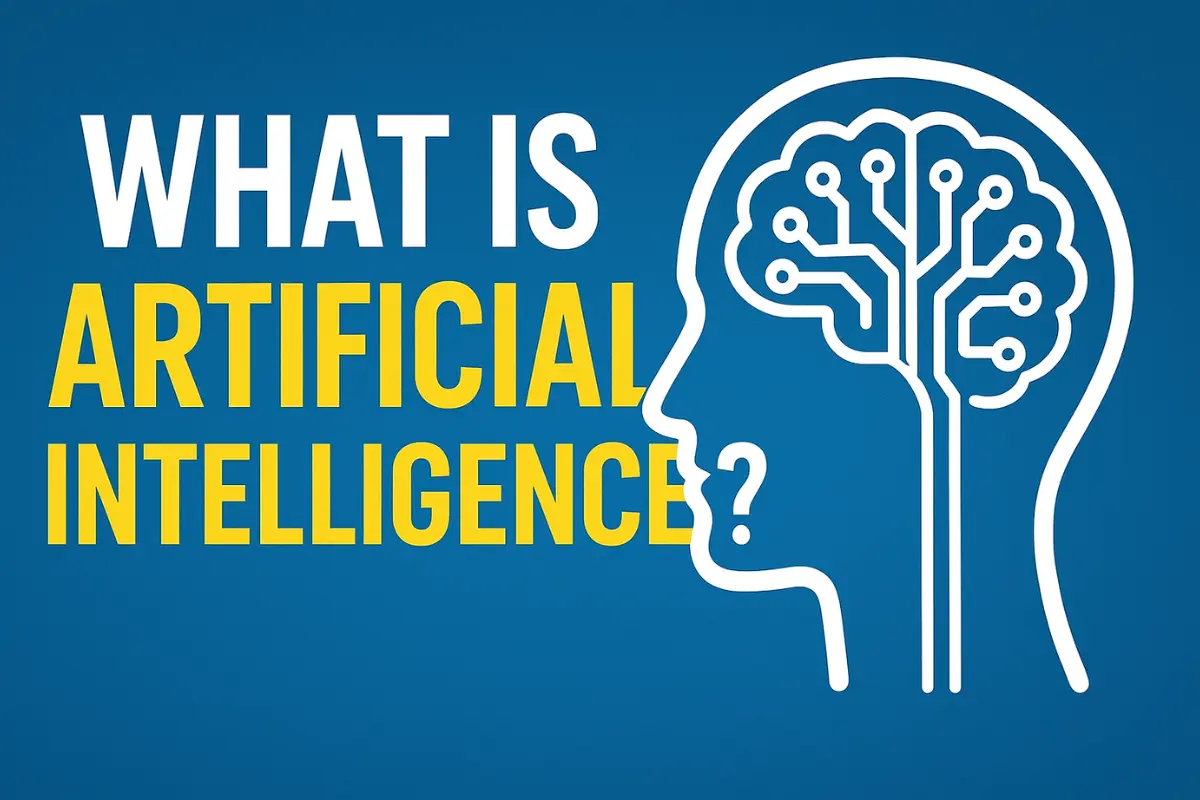
Artificial Intelligence, commonly known as AI, is one of the most revolutionary technologies in the modern world. In simple terms, artificial intelligence refers to the ability of a computer or machine to mimic human intelligence. This includes learning from data, recognizing patterns, solving problems, and making decisions without human intervention. AI is transforming every field—from healthcare and education to transportation, finance, and entertainment.
Definition of Artificial Intelligence in Computers
In computer science, artificial intelligence is the branch of technology that enables machines to think and act like humans. It focuses on developing algorithms and systems that allow computers to perform tasks such as understanding language, identifying images, analyzing data, and responding intelligently to situations.
A computer does not have natural intelligence like humans, so AI allows it to learn and improve through mathematical models, logic, and experience. This imitation of human thinking makes AI one of the most powerful tools in the digital era.
How AI Works in Computers
AI works by processing large amounts of data and learning from it. When a computer is given information, it identifies patterns and uses them to make predictions or decisions. This process mainly involves:
1. Machine Learning (ML)
Machine learning is a core part of AI. It enables computers to learn automatically through experience. For example, when AI is trained on thousands of photos of dogs, it learns to recognize a dog in any new image.
2. Deep Learning
Deep learning uses complex neural networks—layers of algorithms that work like the human brain. This technology powers advanced AI systems such as voice assistants, facial recognition, and self-driving cars.
3. Natural Language Processing (NLP)
NLP helps computers understand and respond to human language. Chatbots, virtual assistants, and translation tools use NLP to communicate smoothly with users.
4. Computer Vision
This field allows computers to interpret and analyze visual information. It is used in medical imaging, security surveillance, and even smartphone cameras.
Also read: Future-Proof Jobs in the Age of AI: Careers Safe from Automation
Why Artificial Intelligence Is Important
AI is important because it automates complicated tasks, reduces errors, and makes systems faster and smarter. Computers can now process huge amounts of information in seconds, something impossible for humans to do manually. AI helps businesses make better decisions, improves customer experience, and enhances productivity.
AI also plays a vital role in emerging technologies such as robotics, autonomous vehicles, and smart devices.
Real-World Applications of AI in Computers
-
Voice assistants like Alexa, Siri, and Google Assistant
-
Recommendation systems used by YouTube, Netflix, and Amazon
-
Healthcare diagnostics such as detecting diseases from scans
-
Banking and fraud detection
-
Smart home devices
-
Navigation and self-driving vehicles
Artificial intelligence in computers is the science of making machines act intelligently. It enables computers to learn, adapt, and perform tasks that usually require human intelligence. As AI continues to advance, it is reshaping the future of technology, making our digital world more efficient, reliable, and innovative.