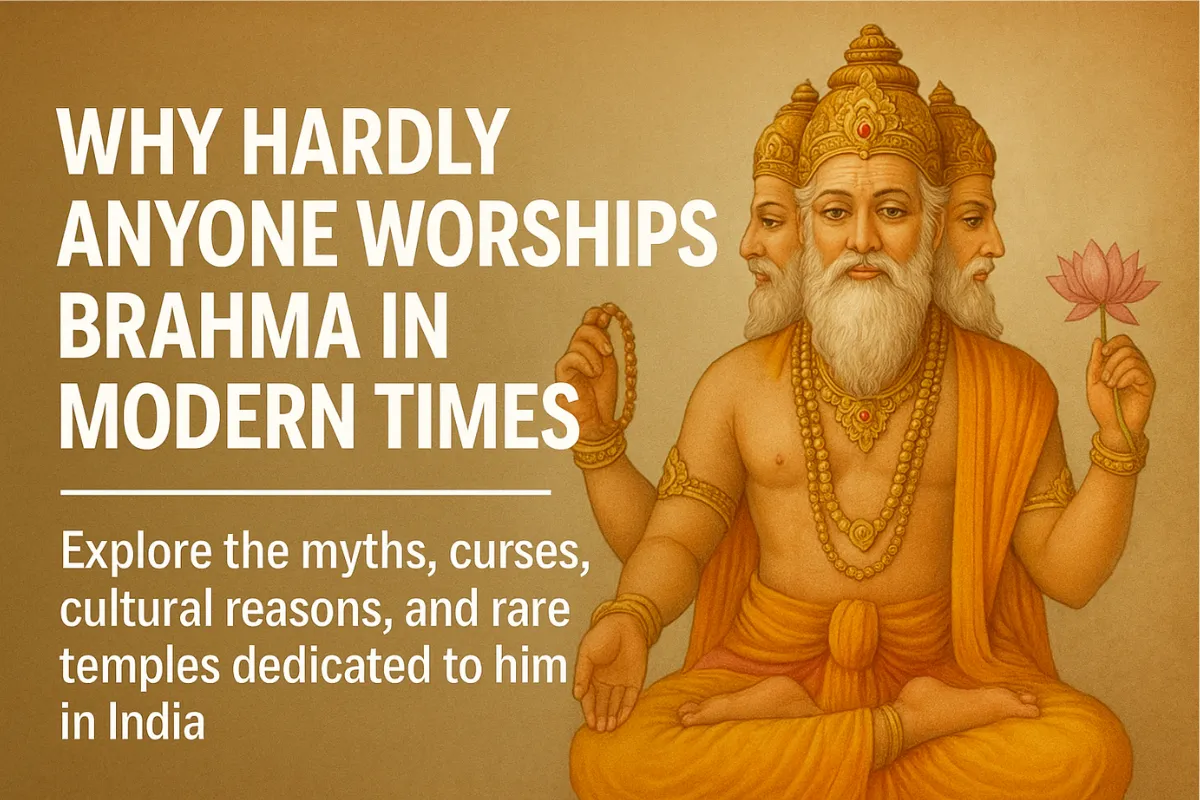
In Hinduism, Lord Brahma is known as the creator of the universe, yet paradoxically, he receives far less devotion compared to Lord Vishnu and Lord Shiva. Across India, there are thousands of temples dedicated to Vishnu and Shiva, but Brahma temples are extremely rare, with the most prominent one located in Pushkar, Rajasthan. This decline in worship is deeply rooted in mythology, philosophy, and cultural practice.
Mythological Beliefs
Ancient texts narrate that Brahma, Vishnu, and Shiva together represent the divine trinity — creation, preservation, and destruction. However, Hindu legends claim that Brahma was cursed for arrogance and dishonesty. In one story, he falsely declared that he had reached the cosmic origin, which angered Lord Shiva. As punishment, Brahma was denied widespread worship among humans.
Philosophical Interpretations
Unlike Vishnu, who manifests as different avatars to protect the world, or Shiva, who embodies both asceticism and household life, Brahma’s role is considered complete once creation is finished. He does not intervene in the ongoing cycles of preservation or destruction, which makes his presence less significant in everyday worship.
Cultural and Ritual Shifts
Over centuries, Hindu rituals gradually gave more prominence to Vishnu and Shiva, as they are directly associated with human needs such as protection, prosperity, and liberation. The act of creation, symbolized by Brahma, became more of a philosophical idea than a religious practice, resulting in fewer temples and rituals in his name.
Also read: Vastu Tips For Kitchen: किचन से जुड़े वास्तु शास्त्र के 5 अहम नियम
Temples and Worship Today
Despite this, some sacred spaces remain. The Pushkar Brahma Temple in Rajasthan continues to draw devotees, particularly during the annual Pushkar Fair. A few lesser-known temples dedicated to Brahma also exist in South India, but they remain exceptions rather than the norm.
Enduring Significance
Although daily worship of Brahma has diminished, his symbolic importance in Hindu thought is undeniable. He represents the eternal principle of beginnings, reminding believers of the foundation of existence even if rituals around him are rare.