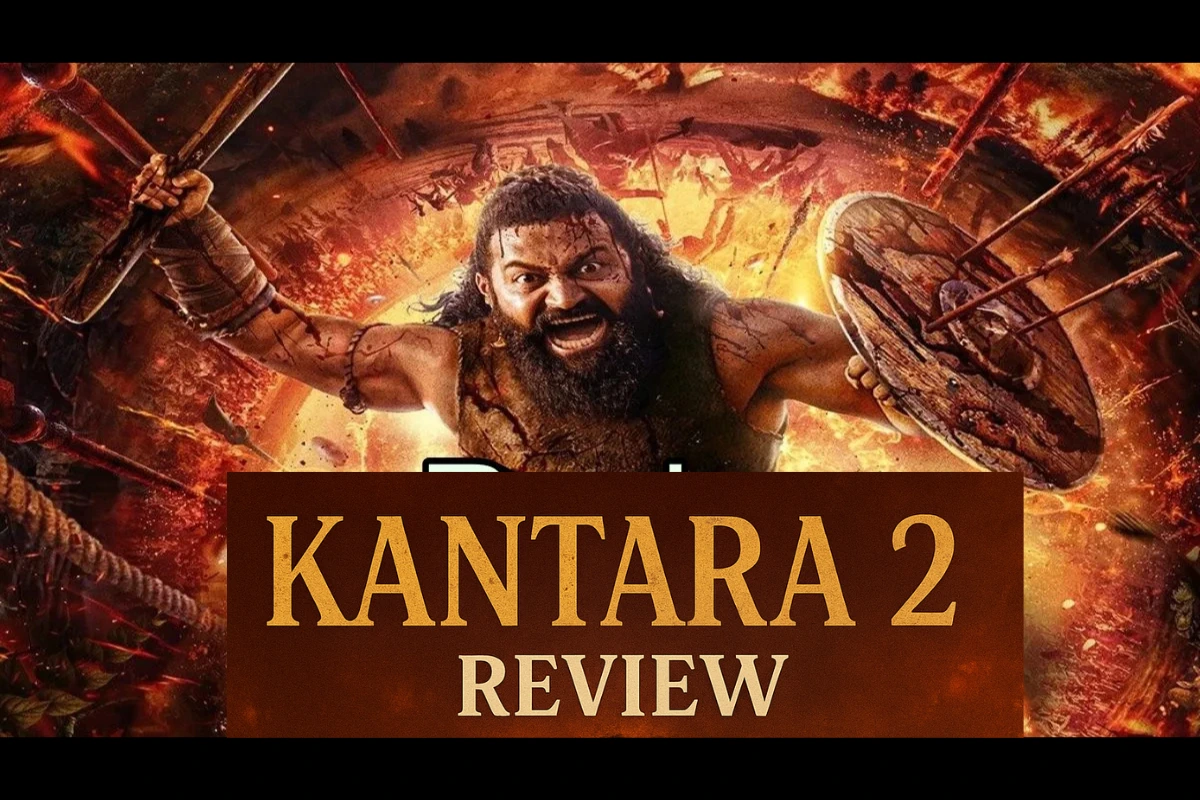
After the thunderous success of Kantara (2022), expectations for Kantara 2 were sky-high. The first film captured audiences with its breathtaking blend of mythology, nature, and raw human emotion, leaving fans eager to know the origins of its mystical tale.
Now, Kantara 2, subtitled Kantara: Chapter 1, takes us back in time — delving into the roots of divine rage, faith, and destiny. It’s not just a sequel; it’s a spiritual excavation that unearths where it all began.
🔱 Story and Setting
Set centuries before the events of the original film, Kantara 2 explores the origins of Panjurli Daiva — the deity who protects the land and its people. The story unfolds in an ancient coastal village surrounded by dense forests and sacred groves, where spirituality and nature are intertwined.
Rishab Shetty, who directs and stars in the film, plays a fierce and tormented character — one who bridges the human and divine realms. The film’s narrative connects myth with morality, questioning the fragile balance between faith, power, and greed.
Unlike the first movie, which balanced rural realism with mysticism, Kantara 2 leans heavily into divine lore, immersing viewers in ritualistic intensity and spiritual symbolism.
🎭 Performances That Speak Beyond Words
Rishab Shetty once again proves his mastery, both as a storyteller and performer. His screen presence commands attention — fierce in action, tender in devotion, and terrifying in transformation.
Rukmini Vasanth brings quiet strength and emotional balance, while Gulshan Devaiah and Jayaram contribute depth and gravity to the supporting cast. Each character feels like an integral thread in the web of destiny that defines the film’s mythology.
There’s a particular scene — where the Daiva dance unfolds under the moonlight — that sends shivers down your spine. It’s not just acting; it’s divine embodiment.
🎥 Cinematography and Technical Brilliance
Visually, Kantara 2 is nothing short of spectacular. Arvind S. Kashyap’s cinematography transforms the forest into a living, breathing entity. The play of light and shadow, the earthy tones, and the ritualistic visuals create an atmosphere that feels both sacred and cinematic.
The background score by B. Ajaneesh Loknath elevates every frame. His music doesn’t just accompany the story — it becomes the voice of the divine. The drum beats and chants reverberate in your chest, making you feel like part of the ritual.
⚡ The Soul and the Struggle
While Kantara 2 expands its world with scale and mythology, it occasionally loses the simplicity that made the first part so emotionally powerful. The storytelling sometimes feels overstuffed with subplots and explanations.
The first half moves at a meditative pace, slowly building the mythos, while the second half delivers the emotional and spiritual payoff. The climax — a breathtaking blend of performance, devotion, and divine fury — is the film’s biggest triumph.
Rishab Shetty’s vision is grand, but the complexity of the script may challenge viewers who expect a straightforward continuation. Still, the payoff is worth the patience.
Also read: Jolly LLB 3 Reviews – Audience Reaction, Storyline & Verdict
🪶 Themes That Resonate
At its core, Kantara 2 explores the eternal conflict between man, nature, and divinity. It speaks about protecting sacred land, respecting tradition, and the consequences of human arrogance.
The movie serves as a reminder that faith isn’t blind — it’s a force that demands respect and understanding. It’s not just a mythological tale; it’s a mirror to the human condition.
Kantara 2 isn’t just a film — it’s a cultural experience. It carries the essence of Indian folklore and transforms it into cinematic poetry. Though it stumbles in pacing, its vision, craft, and emotion more than compensate.
If Kantara (2022) was a storm of devotion, Kantara 2 is the calm before that storm — a divine revelation that deepens the legend.
⭐ Rating: 8/10
A majestic, spiritually charged prequel that expands the universe of Kantara with mythic grandeur and emotional depth.